
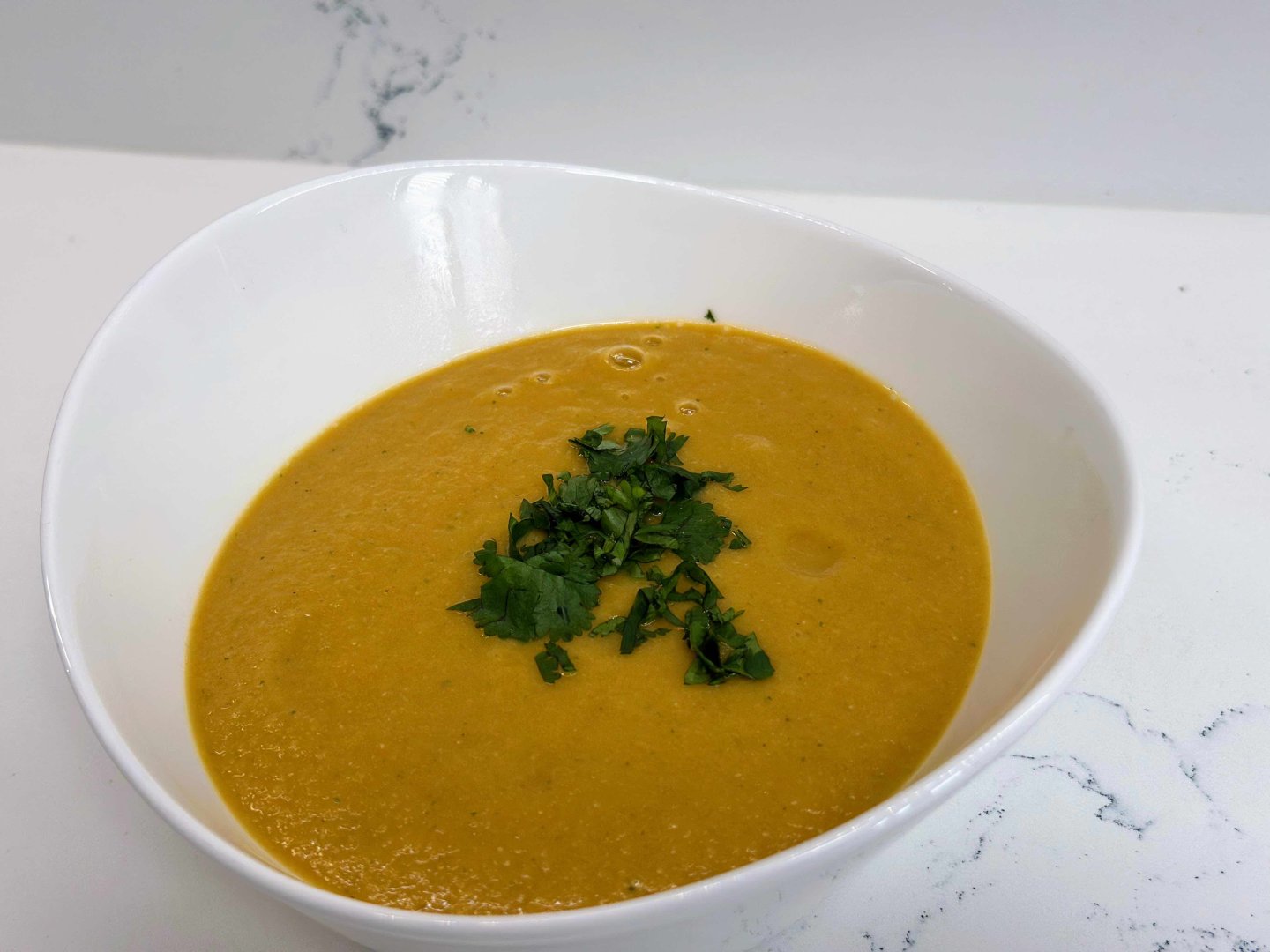
Sometimes you can’t beat the comfort of a delicious bowl of hot thick soup. One of my nutrition clients regularly chooses a supermarket carrot and coriander soup for lunch, but they didn’t realise that the soup wasn’t hitting much in terms of nutritional value when it came to protein and fibre in particular.
To help my client I came up with this recipe. It’s thick and creamy without extra calories from cream, it’s higher in protein than the supermarket option and it’s also packed with fibre to keep those good gut bacteria happy!
If that wasn’t enough, this soup recipe is significantly cheaper per portion than its supermarket counterpart, can be batch cooked and frozen. All good things in my book!
Read the blog article in full and learn how I’ve made this soup cost less than the supermarket version while considerably increasing the protein and fibre, while reducing the salt levels.
Ingredients for 2 litres, 3 servings (approx)
| 800g | Carrots |
| 150g | White onion |
| 1 | *Vegetable stock pot/cube |
| 400g can | Chickpeas, drained and rinsed |
| 350g | Baking potato, raw |
| 1 sachet | Miso paste |
| 1-2 tsp | Ground cumin |
| 10g | *Fresh coriander |
| 1 tsp | Vegetable oil |
| 2 litres | Boiling water |
| Salt & pepper |

Method
- Preheat a large sauce pan before adding the oil and sliced onion. Take a few minutes to soften the onions.
- Wash the carrots and baking potatoes.
- Top and tail the carrots, then leaving the skins on, cut them into large chunks.
- Cut the baking potato into large chunks, also leaving the skins on.
- Once the onions have had a chance to soften and change to a translucent colour, add the ground cumin and stir to thoroughly coat the onion.
- Add the chopped carrot and potato to the pan along with the rinsed chickpeas.
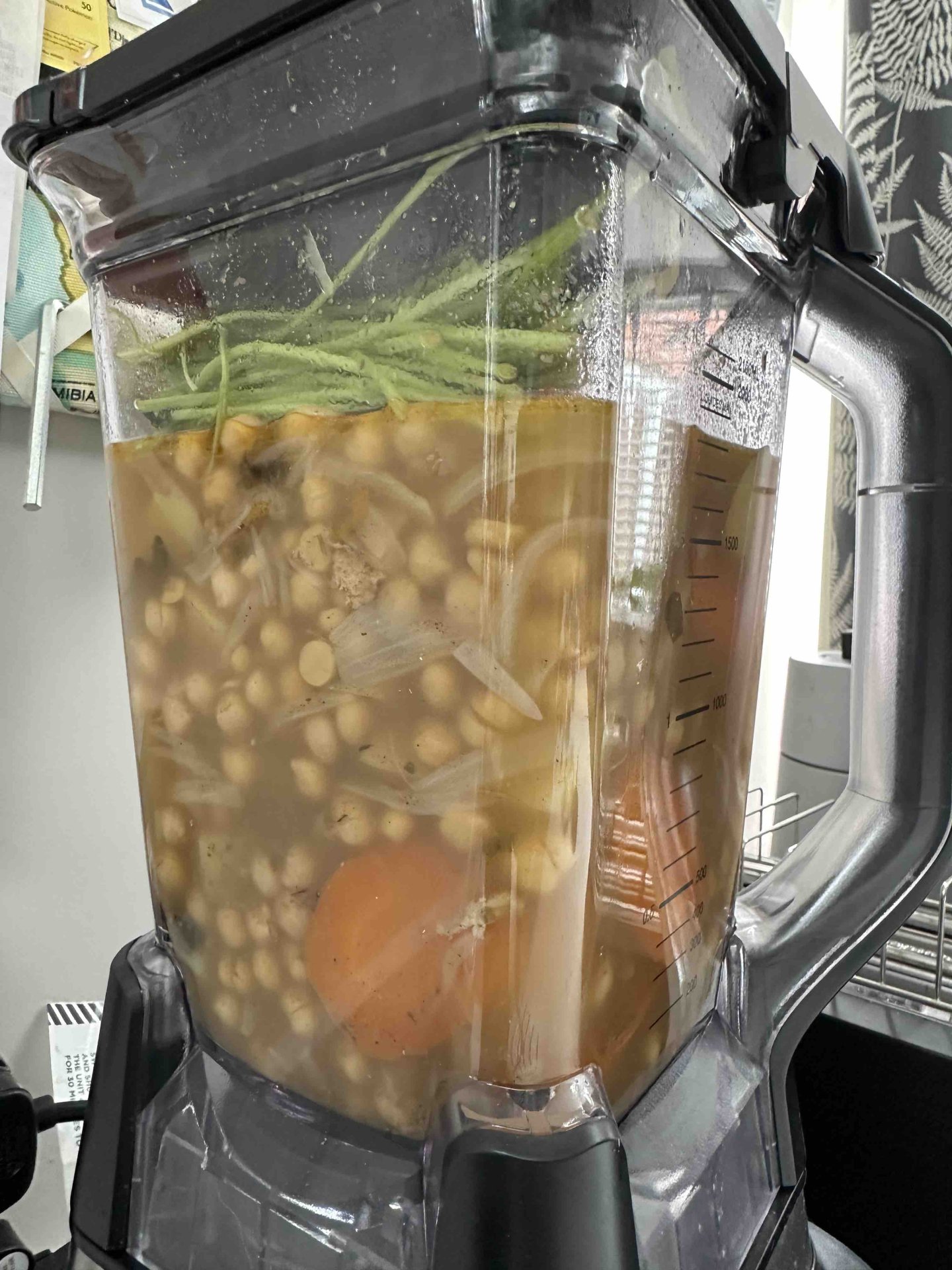
- Give everything a good stir before adding the miso paste, vegetable stock pot/cube and the boiled water. There should be enough water to comfortably cover the ingredients.
- Pop a lid onto the pan, bring to the boil and then reduce the heat to a medium simmer.
- After approximately 20 minutes, use a knife to pierce the carrots and potatoes to check if they’re cooked. If the knife doesn’t easily pass through them, leave to cook for a further 20 minutes.
- The soup is ready to blend when the carrots and potato pieces are soft.
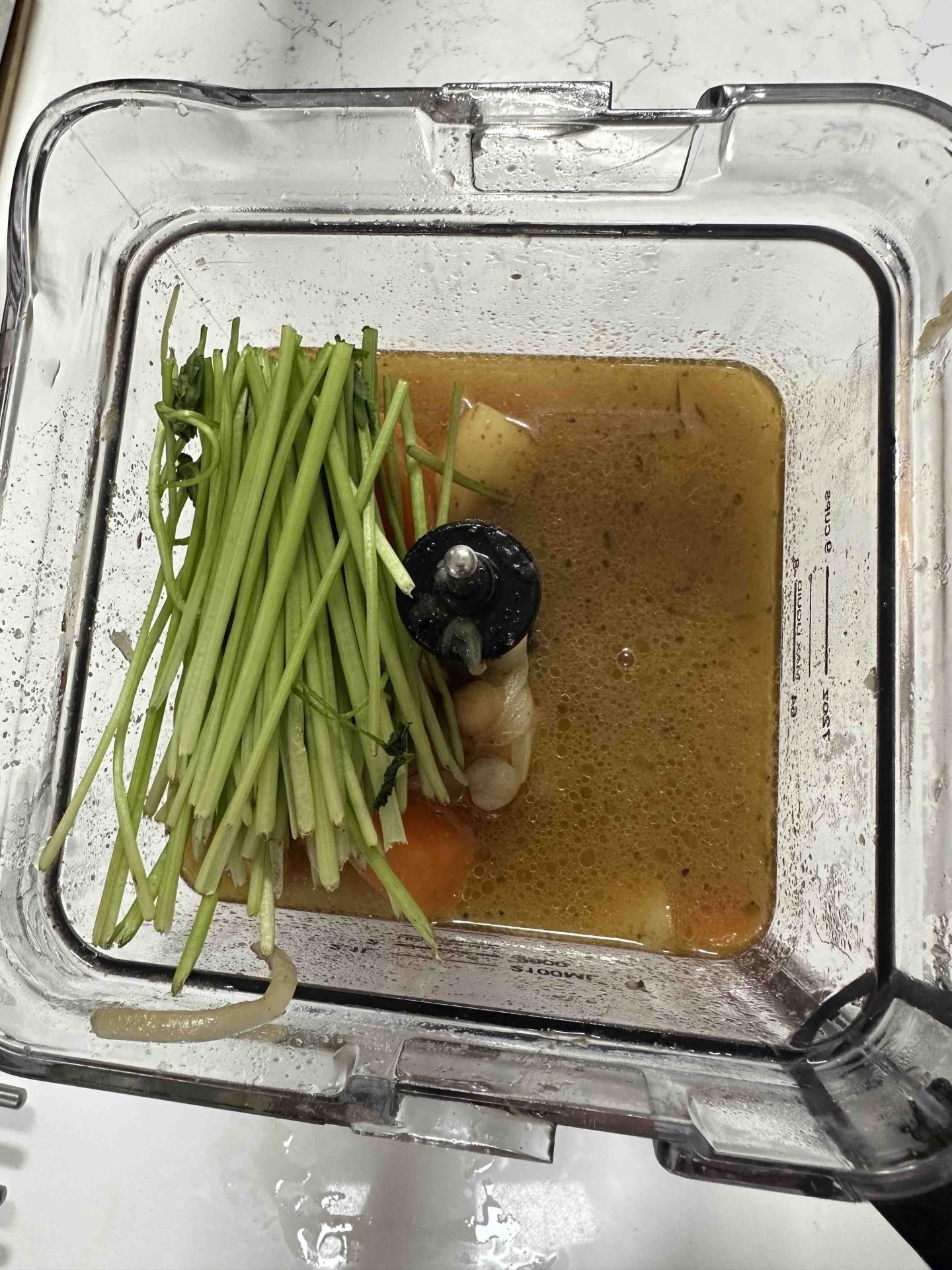
- Remove the pan from the heat and add the coriander. I tend to use the stalks as these are packed with flavour and a little goes a long way!
- Blend the soup until smooth using a stick blender or food processor.
- Once blended, put the pan back onto the heat, taste the soup to check the seasoning and add salt and pepper to taste (if needed).
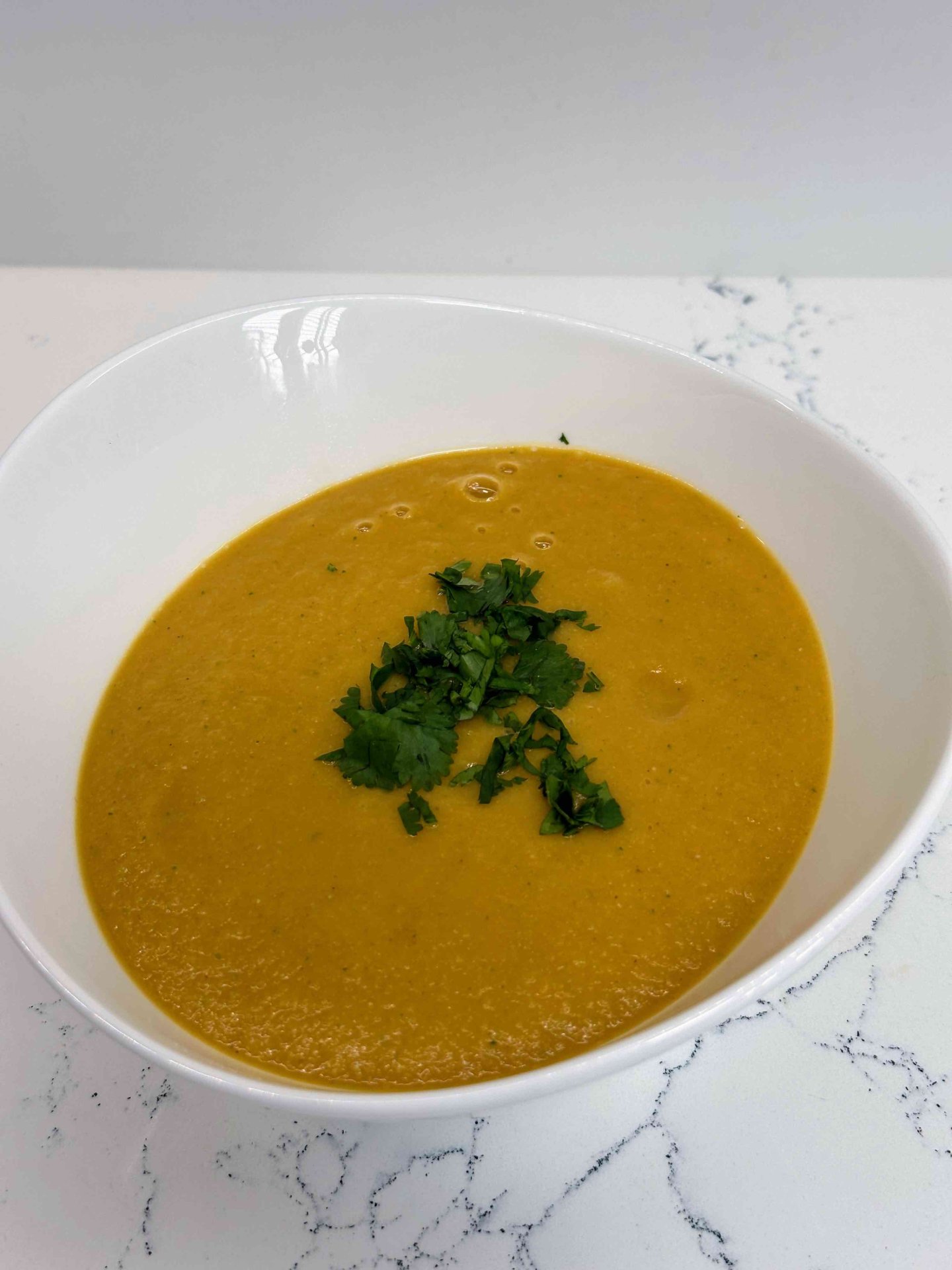
- Pour the soup into your bowl, top some chopped coriander.
- Enjoy!
Notes
- I’ve made this soup using a vegetable stock pot/cube and home made chicken stock. Both work well so use what you prefer.
- To get good flavour from the coriander I only use stalks in the soup mix.
- I use miso paste to add a depth of flavour, but feel free to leave it out or swap it for light soy sauce or even a little Thai Fish Sauce.
- I made a minimum of 2 litres of soup with these ingredients. The soup will last for approximately 3 days in the fridge and 2 months in the freezer if frozen once cooled.

The nutritional panel head to head
| SUPERMARKET | THE LEAN COOK |
| 1 x 600g Pot | 600g serving |
| | |
| Protein – 1.8g | Protein – 11.1g |
| Fat – 3.4g | Fat – 5.1g |
| Fibre – 5.2g | Fibre – 13.8g |
| Salt – 2.52g | Sodium – 0.67g |
| Calories – 148 | Calories – 319 |
Maximise your Meal
The information in this section is designed to offer helpful insights on maximising
the benefits of your meals. Please note, it is not intended to replace nor does it
constitute  personalised nutritional advice.
The pulses are the quiet heroes here — around 7g of fibre per 100g, so a serving carries roughly 9.2g towards the 30g a day we are all meant to be getting, and most of us manage about 20g. One tip: rinse them as well as draining them. Draining alone removes around 36% of the sodium, draining and rinsing closer to 41%.
Potatoes are lighter than their reputation. New potatoes are 68 calories per 100g raw and old potatoes 82, so your 117g a serving is around 88 calories, with about 2.2g of fibre. What you cook them in decides everything else.
The carrots do more than sweeten the base: 3.9g of fibre per 100g, so 267g a serving contributes about 10.4g towards a daily target most people fall short of.
The onion is pulling more weight than it gets credit for: 2.2g of fibre per 100g, and sweetness that develops with slow cooking rather than with added sugar. All for 35 calories per 100g.
Information correct at time of writing
Nutritional information source: McCance and Widdowson’s Composition of Foods Integrated Dataset, gov.uk
Fibre guidance: NHS — How to get more fibre into your diet
Tinned pulses source: Reducing sodium in canned beans
Updated 19th August 2026
Any 3rd party links are being provided as a convenience and for informational purposes only; they do not constitute an endorsement or an approval by The Lean Cook of any of the products, services or opinions of the corporation or organisation or individual. The Lean Cook bears no responsibility for the accuracy, legality or content of the external site or for that of subsequent links. Contact the external site for answers to questions regarding its content.

Find me on: Web
